


Reel Clever Films
As a parent, you want your kids to grow and develop into successful adults. Providing a stable and safe home is an important part of doing that.But…

Alijah Stewart
/
Courtesy of Yvette Rock

Photo courtesy of Jasmine Uqdah
-
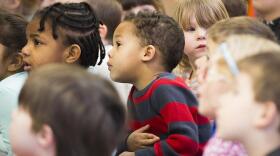 One of the biggest obstacles for low-income and poor families: child care and preschool. It's hard to get a job or go to classes when you have a…
 -
 Among the hundreds of stories produced by the State of Opportunity team was one about a Hillsdale family, Amanda and Mike Hood, and their two young…
 -
 Too many Michigan babies are dying.For every 1,000 babies born in our state, roughly seven won't make it to their first birthday. That's a full point…
 -
 The State of Opportunity team began its work in 2012. Since then, they've produced hundreds of stories exploring the barriers to success that low-income…
 -
 Earlier this week, my colleague Dustin Dwyer brought you Pushed Out: A documentary on housing in Grand Rapids, our final State of Opportunity documentary.…
 -
 Don Norman settles into his chair, and pulls his blanket up to his chest. On the TV, Dick Van Dyke is about to solve a murder.The room is warm, shades…
 -
 Week after week for five years, we’ve played the same clip at the start of every State of Opportunity story. You hear three kids telling us what they want…
 -
 About 15 million children in the United States–21% of all kids–live in impoverished families. These kids are at higher risk for negative health outcomes…
 -
 1. How poverty changes the brain | The AtlanticWe know living in poverty can have physical effects, like increased risk for asthma, obesity and hunger.…
 -
 In the past few years, you may have heard the term "lunch shaming" being thrown around. It's basically the practice of penalizing students who don't have…


